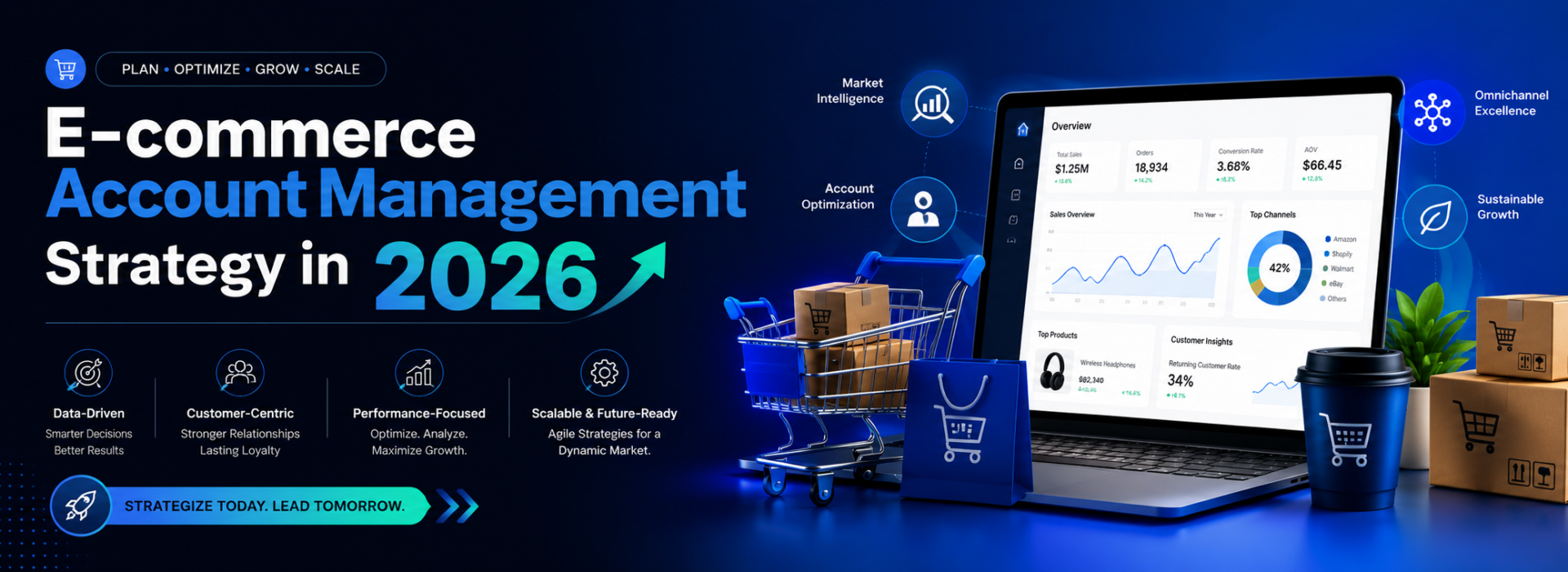
E-commerce Account Management Strategy in 2026: Driving Online Success with Bullzeye Services
The e-commerce landscape in 2026 is transforming rapidly, driven by technological advancements and changing consumer expectations. With changing customer behavior, AI-powered platforms, and increasing competition, businesses can no longer rely on basic selling techniques. In 2026, brands need a robust e-commerce account management strategy to stay competitive and maximize growth.
At Bullzeye Services, we help businesses streamline their online operations, improve marketplace performance, and increase revenue through strategic account management. Whether you sell on Amazon, Flipkart, Shopify, or other marketplaces, an effective strategy can transform your business.
In this guide, we will explore the latest e-commerce management trends, best practices, and proven strategies that align with Google’s latest updates and SEO standards.
Why E-commerce Account Management Matters in 2026
E-commerce account management is no longer limited to product uploads and order processing. It now includes:
- Marketplace optimization
- Inventory management
- Customer relationship management
- Advertising campaigns
- Data analytics
- AI-driven personalization
- Brand reputation management
Businesses that invest in professional account management experience:
✔ Higher sales conversions
✔ Better customer retention
✔ Improved marketplace rankings
✔ Reduced operational errors
✔ Increased profitability
As competition grows, brands that ignore account management risk losing customers and revenue.
What is E-commerce Account Management?
E-commerce account management refers to the process of managing and optimizing an online store or marketplace account to maximize performance and customer satisfaction.
It includes:
- Product listing optimization
- Order management
- Pricing strategy
- Inventory tracking
- Customer support
- Advertising management
- Performance analysis
At Bullzeye Services, we offer end-to-end e-commerce solutions that help businesses focus on growth while we handle operational complexities.
Key E-commerce Trends Shaping 2026
The future of e-commerce is driven by technology and customer expectations. Here are the major trends businesses should embrace:
1. AI-Powered Personalization
Artificial intelligence is helping businesses deliver personalized shopping experiences based on:
- Customer behavior
- Purchase history
- Browsing patterns
Personalized recommendations increase customer engagement and improve conversion rates.
2. Voice Commerce Growth
Voice assistants are becoming a preferred shopping tool. Optimizing product listings for conversational searches will be essential in 2026.
3. Omnichannel Selling
Customers interact across multiple channels:
- Websites
- Mobile apps
- Social media
- Online marketplaces
A unified account management strategy ensures consistency across all platforms.
4. Data-Driven Decision Making
Analytics tools help businesses track:
- Sales trends
- Customer behavior
- Advertising ROI
- Inventory movement
Companies using data effectively gain a strong competitive advantage.
Essential E-commerce Account Management Strategies for 2026
1. Optimize Product Listings for Search Visibility
Product listings play a major role in online success. Proper optimization improves search rankings and conversions.
Best practices include:
- Using high-search keywords naturally
- Writing compelling product descriptions
- Adding high-quality images
- Including detailed specifications
- Optimizing titles and meta descriptions
Important SEO Keywords:
- E-commerce account management
- Marketplace management services
- E-commerce growth strategy
- Online store management
- Amazon account management
- Shopify management services
- E-commerce SEO services
- Inventory management solutions
- Product listing optimization
- Marketplace optimization services
Keyword density should remain natural (1–2%) to comply with Google’s latest guidelines.
2. Maintain Accurate Inventory Management
Inventory issues directly affect customer satisfaction and seller ratings.
Poor inventory management may result in:
- Stockouts
- Overselling
- Delayed shipments
- Negative reviews
Bullzeye Services helps businesses automate inventory tracking to ensure seamless operations across multiple platforms.
Benefits include:
✔ Real-time stock updates
✔ Reduced human errors
✔ Better forecasting
✔ Faster order fulfilment
3. Use Data Analytics for Better Decisions
Modern e-commerce success depends on data.
Businesses should regularly monitor:
- Sales performance
- Traffic sources
- Customer acquisition costs
- Conversion rates
- Product profitability
Analytics enable businesses to identify opportunities and improve strategies continuously.
A data-driven approach leads to smarter decisions and sustainable growth.
4. Focus on Customer Experience
Customer experience has become one of the biggest ranking and conversion factors.
Customers expect:
- Fast delivery
- Easy returns
- Personalized communication
- Quick customer support
Satisfied customers are more likely to make repeat purchases and recommend your brand to others.
Effective customer management strategies include:
- Automated email campaigns
- Live chat support
- Loyalty programs
- Personalized offers
- Post-purchase follow-ups
5. Leverage Marketplace Advertising
Paid advertising remains essential for visibility in crowded marketplaces.
Popular advertising channels include:
- Amazon PPC
- Google Shopping Ads
- Facebook Ads
- Instagram Ads
A strong advertising strategy helps businesses:
✔ Increase visibility
✔ Generate targeted traffic
✔ Boost conversions
✔ Improve ROI
Bullzeye Services creates optimized ad campaigns to maximize returns while reducing advertising costs.
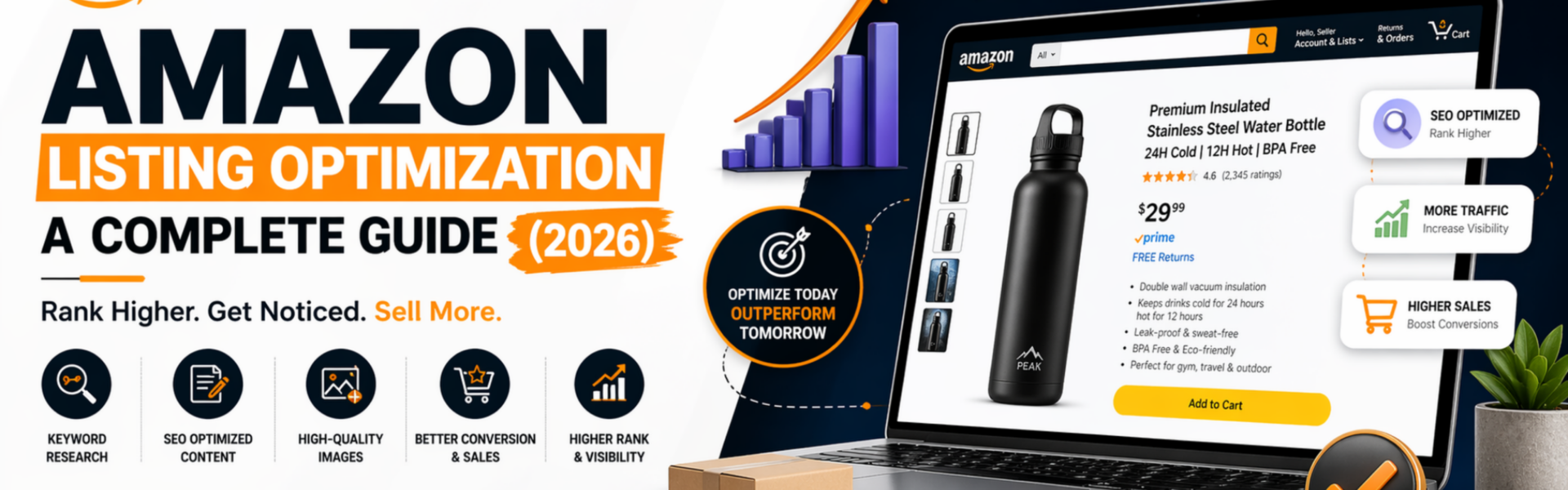
Importance of Product Listing Optimization
Product listing optimization is one of the most important aspects of e-commerce account management.
A high-converting listing should contain:
Optimized Product Title
Craft keyword-rich titles that improve search visibility without compromising readability.
Compelling Descriptions
Focus on customer benefits rather than only features.
High-Quality Images
Visual content significantly impacts buying decisions.
Bullet Point Features
Highlight:
- Key benefits
- Technical specifications
- Warranty details
- Unique selling points
Well-optimized listings improve both search rankings and customer trust.
How AI is Transforming E-commerce Account Management
Artificial intelligence is reshaping e-commerce operations in 2026.
AI applications include:
- Demand forecasting
- Customer segmentation
- Dynamic pricing
- Chatbots
- Fraud detection
Automated recommendations
Businesses adopting AI technologies experience the following:
✔ Better efficiency
✔ Reduced costs
✔ Improved customer engagement
✔ Higher profitability
Bullzeye Services integrates advanced technologies to help brands stay ahead of market trends.
Multi-Channel Selling: The Future of E-commerce
Consumers shop through multiple channels before making purchasing decisions.
A successful strategy includes selling across the following:
- Amazon
- Flipkart
- Shopify
- WooCommerce
Social commerce platforms
Managing multiple channels manually can become difficult.
Professional account management ensures:
- Unified inventory
- Consistent pricing
- Better customer experiences
- Centralized reporting
This improves operational efficiency and brand visibility.
Common Challenges in E-commerce Management
Many businesses struggle with:
Inventory Mismatches
Incorrect stock levels often lead to order cancellations.
Marketplace Policy Violations
Failing to follow marketplace guidelines can result in account suspension.
High Advertising Costs
Poor campaign optimization increases acquisition costs.
Low Conversion Rates
Weak product pages reduce sales opportunities.
With expert support from Bullzeye Services, businesses can overcome these challenges and scale effectively.
Why Choose Bullzeye Services for E-commerce Account Management?
At Bullzeye Services, we provide comprehensive solutions tailored to your business goals.
Our Services Include:
- Product listing optimization
- Marketplace account management
- Inventory management
- Advertising campaign management
- Performance reporting
Customer support solutions
SEO optimization
Sales growth strategies
Our team focuses on delivering measurable results while maintaining operational excellence.
Benefits of Working with Bullzeye Services
✔ Increased sales growth
✔ Improved customer retention
✔ Better marketplace rankings
✔ Enhanced brand visibility
✔ Optimized advertising ROI
✔ Efficient operations
Whether you are a startup or an established brand, our experts create customized strategies to help your business succeed.
Future-Proof Your E-commerce Business
The e-commerce landscape will continue evolving with new technologies and changing customer expectations. Businesses that adapt quickly and implement strategic account management practices will achieve long-term success.
Investing in professional e-commerce account management services enables businesses to:
- Improve operational efficiency
- Increase customer satisfaction
- Enhance marketplace visibility
- Drive sustainable growth
With Bullzeye Services, businesses can confidently navigate the future of e-commerce and unlock new opportunities in 2026 and beyond.
Conclusion
E-commerce success in 2026 requires more than simply selling products online. It demands strategic planning, AI integration, customer-focused experiences, and continuous optimization.
A well-structured e-commerce account management strategy helps businesses streamline operations, improve customer relationships, and maximize profitability.
Bullzeye Services empowers brands with expert solutions designed to drive measurable growth in today’s highly competitive digital marketplace. By leveraging data, automation, and SEO best practices, businesses can stay ahead of competitors and build a sustainable future.
FAQs
1. What is e-commerce account management?
E-commerce account management involves managing online store operations, product listings, inventory, advertising, and customer support to improve performance and sales.
2. Why is e-commerce account management important in 2026?
Increasing competition and evolving customer expectations make account management essential for improving efficiency, visibility, and customer satisfaction.
3. How does Bullzeye Services help e-commerce businesses?
Bullzeye Services provides marketplace management, SEO optimization, advertising solutions, inventory management, and customer support services.
4. What are the benefits of product listing optimization?
Optimized listings improve search rankings, increase click-through rates, and boost conversions.
5. How does AI improve e-commerce management?
A unified account management strategy ensures consistency across all platforms.





































I have started Services from Bullzeye and they are working nicely in my account, as I have started with Zero before 2 Months back and Now i am getting 500 + Orders, the team is really corporative.